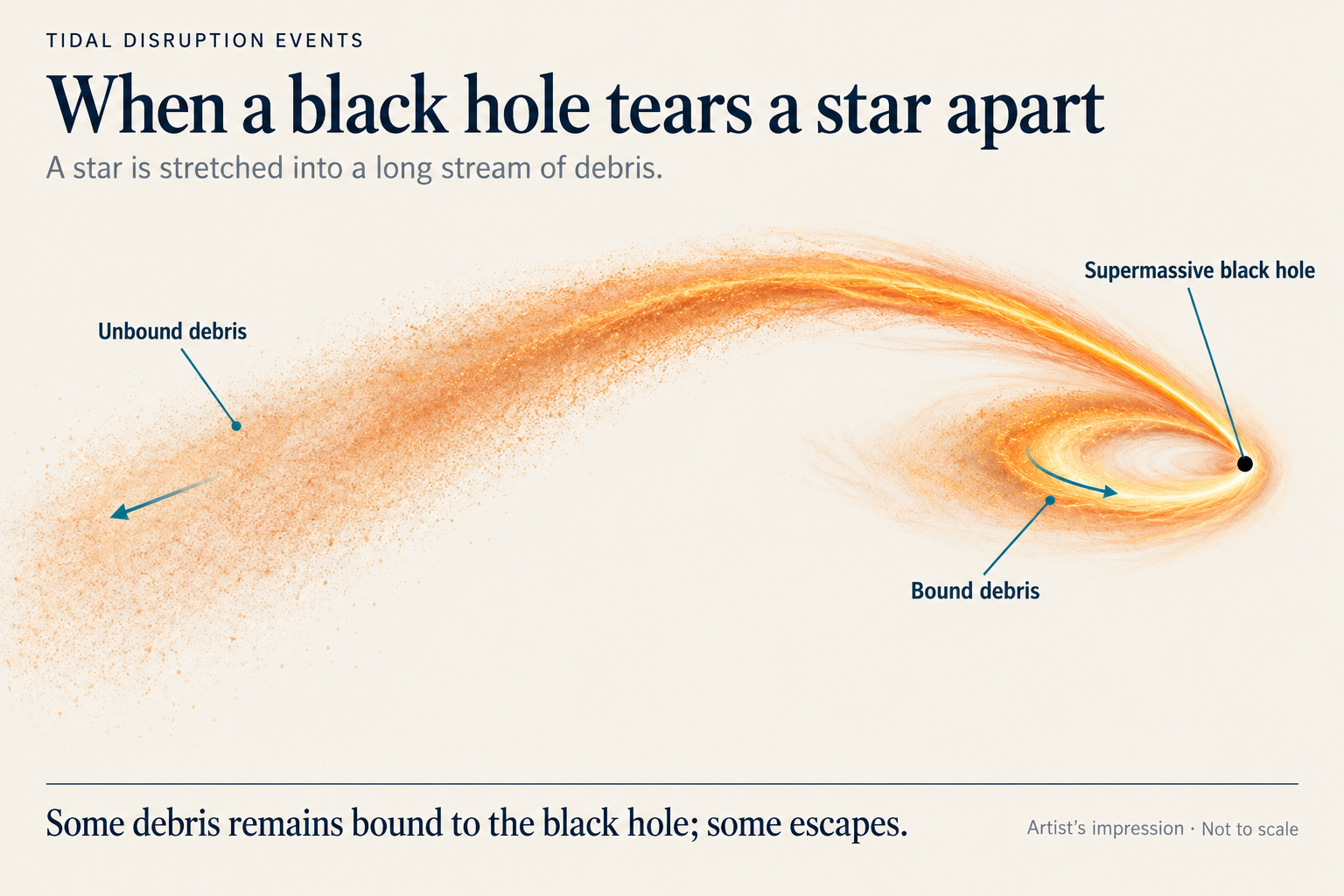
A star passing too close to a supermassive black hole can be torn apart by its tidal forces. Some of the stellar debris returns toward the black hole, producing a luminous flare and, in some cases, powerful outflows or jets. These tidal disruption events offer an opportunity to watch a black hole begin feeding and investigate how this process launches material outward.
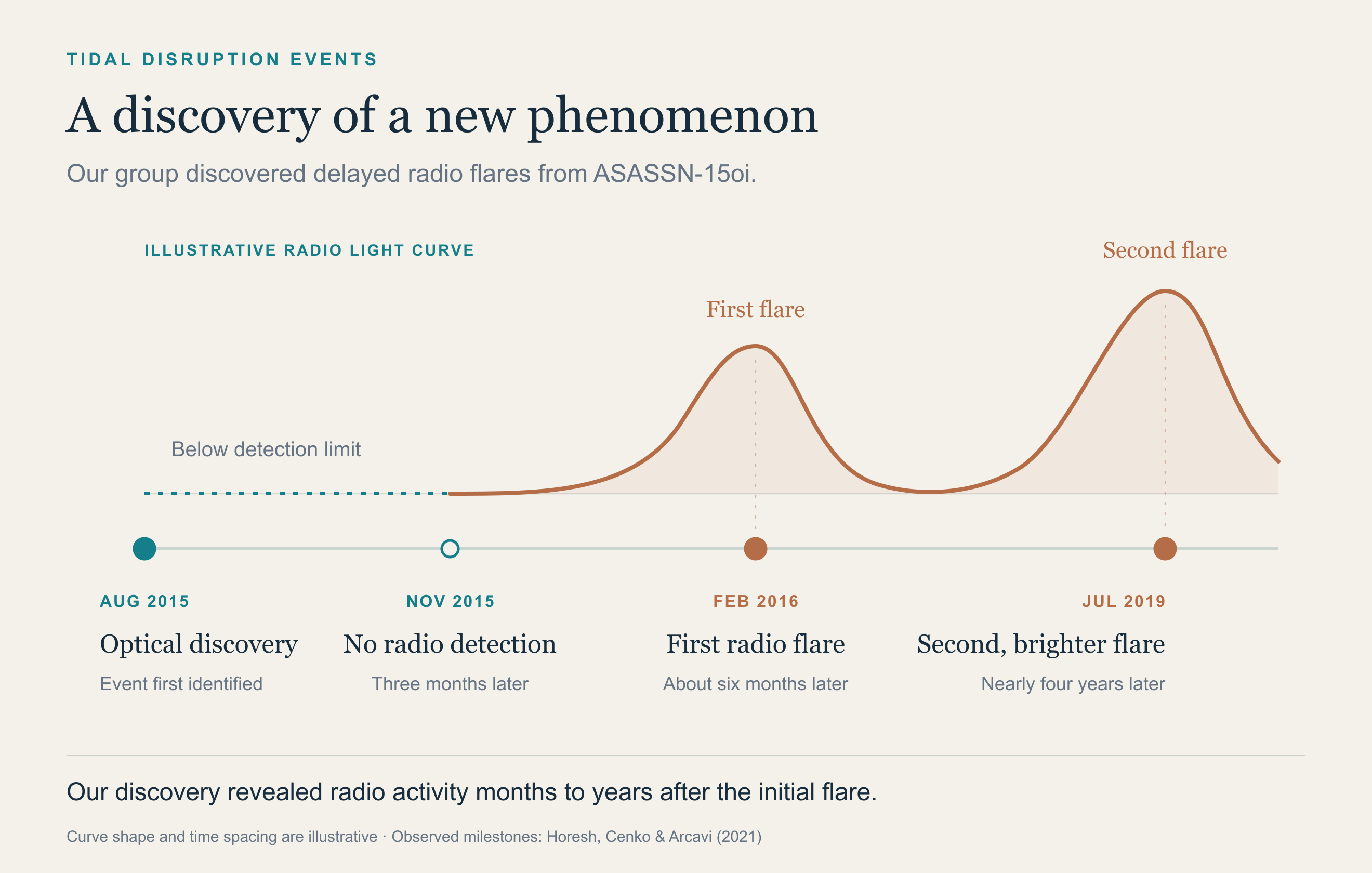
Our group discovered a new phenomenon in these events: delayed radio flares that emerge months or years after the initial stellar disruption. This unexpected behaviour challenged models in which an outflow is launched promptly after the star is torn apart. I use long-term radio monitoring, together with optical and X-ray observations, to investigate the origin of these flares. By modelling how the emission changes with time and frequency, I study when outflows are launched, how they interact with surrounding gas, and how they relate to changes in the flow of matter onto the black hole.